Find milk fridge for Cold Storage, Display, and Frozen Applications
Source 30 milk fridge units from verified suppliers in China. Compare models with electric power sources, stainless steel construction, and options for single or double temperatures to suit commercial cold storage and display needs.
Key considerations
Products List




Comprehensive Sourcing Guide
Strategic Sourcing Guide for Industrial Milk Refrigeration Units
Understanding Technical Specifications and Operational Capabilities
When sourcing equipment specifically designated for milk storage and processing, buyers must first distinguish between general refrigeration and specialized units designed for dairy applications. The market offers a diverse array of configurations, ranging from compact display coolers to large-scale cold storage solutions. A critical observation in the current supply landscape is the variation in power sources; while many units operate on standard electric power, specific models are explicitly noted to utilize electricity as their primary energy input, ensuring consistent cooling performance in commercial environments.
The physical design and installation requirements are equally vital for operational planning. Buyers will encounter units described as "freestanding" or "free-standing," which offer flexibility in placement without the need for built-in cabinetry. These units often feature "upright" styles, maximizing vertical storage space in facilities with limited floor area. Door configurations vary significantly, with options including "single doors," "double doors," and "sliding doors." The choice of door type impacts workflow efficiency; sliding doors are particularly advantageous in high-traffic areas where door swing clearance is limited. Furthermore, the "French door" style is available for models requiring broader access to the interior compartment.
Temperature management is the core function of any milk fridge. The supply data indicates the existence of both "single-temperature" and "double-temperature" systems. Single-temperature units are suitable for maintaining a consistent chill, whereas double-temperature models offer the versatility to store different dairy products or stages of processing at varying thermal conditions. The defrost mechanism is another technical differentiator; "auto defrost" systems are prevalent, reducing manual maintenance requirements and preventing ice buildup that can compromise thermal efficiency. Control interfaces also vary, with some advanced units featuring "computer thermostats" for precise digital monitoring, ensuring that the internal environment remains within the strict parameters required for milk preservation.
Compliance, Certification, and Regulatory Standards
Navigating the regulatory landscape is a non-negotiable aspect of B2B procurement for food-grade equipment. The credibility of a supplier is often reflected in the certifications their products hold. The available data highlights a robust set of certifications, including CE, RoHS, ISO, CCC, CB, SASO, EMC, and ETL. These marks indicate compliance with safety, electromagnetic compatibility, and environmental standards across various global markets. For instance, the CE mark is essential for entry into the European Economic Area, while ETL certification is a recognized safety standard in North America.
Material composition is inextricably linked to food safety compliance. The industry standard for milk refrigeration units frequently involves "stainless steel" construction, particularly for internal surfaces and sanitary components. This material choice is critical for preventing contamination and ensuring that the unit meets "food grade" and "aseptic" requirements. The presence of "stainless steel" in the product attributes suggests a design focused on hygiene and durability, which is paramount when handling perishable dairy products. Additionally, the "sanitary" designation reinforces the unit's ability to maintain a clean environment, minimizing the risk of bacterial growth.
Buyers must verify that the specific model they intend to purchase carries the necessary certifications for their target market. While the observed data lists a comprehensive array of certifications, it is imperative to confirm that the specific batch or model number (such as PRG, US-360, or DF-28) holds these valid credentials. The "ISO" certification, often cited alongside other standards, implies adherence to international quality management systems. Similarly, "RoHS" compliance ensures that the electronic components within the unit do not contain restricted hazardous substances. When evaluating a supplier, requesting proof of these certifications for the specific unit configuration is a standard due diligence step to avoid regulatory hurdles during import or installation.
Cost Drivers and Pricing Dynamics
The financial aspect of sourcing milk refrigeration units is influenced by a complex interplay of specifications, capacity, and customization. The observed market data reveals a substantial price range, extending from approximately $55.70 to $35,000 USD. This wide variance is not arbitrary but is driven by distinct factors related to the unit's capabilities and scale. At the lower end of the spectrum, the cost is likely associated with smaller, single-door units with basic features, such as the 120L models with specific voltage requirements (220V/50Hz) and lower power consumption (100W). These units are typically designed for retail display or small-scale storage.
Conversely, the upper end of the price range reflects industrial-grade solutions. These units often feature larger capacities, such as those exceeding 300L, and may include advanced features like double-temperature control, computer thermostats, and extensive stainless steel construction. The "100-10000L" standard mentioned in the product attributes suggests that the market accommodates everything from small commercial fridges to massive cold storage facilities. The cost also escalates with the inclusion of specialized certifications and complex engineering required for aseptic processing or frozen and chilled applications.
Customization is another significant cost driver. The data indicates that "customization" is available, and some products are explicitly listed as "customized." This implies that buyers can request modifications to dimensions, door configurations, or internal shelving to fit specific operational needs. While customization adds value and ensures a perfect fit, it inevitably increases the unit's price and may impact the lead time. Additionally, the "Minimum Order Quantity" (MOQ) varies from 1 to 600 units. Purchasing a single unit for immediate deployment will carry a different unit cost structure compared to bulk orders, where economies of scale might reduce the per-unit price. Buyers should analyze their total volume requirements against the MOQ to optimize their procurement budget.
Typical Applications and Functional Versatility
The versatility of milk refrigeration units allows them to serve a wide range of applications beyond simple storage. The primary application is clearly defined as "milk" storage, but the functional capabilities extend to broader dairy processing and retail environments. The "frozen and chilled" process designation indicates that these units are capable of handling products that require freezing, as well as those that need to be kept at refrigeration temperatures. This dual capability is essential for facilities that process raw milk, produce dairy products, or manage a diverse inventory of chilled goods.
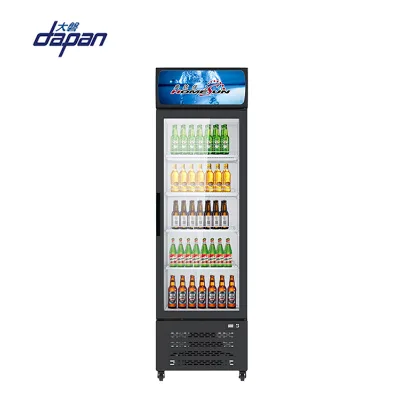
In retail settings, the "display cooler" type is highly relevant. These units are designed to attractively showcase milk products to consumers while maintaining the necessary temperature. The "upright" style and "sliding door" options are particularly suited for supermarket aisles where visibility and accessibility are key. For industrial processing plants, the "cold storage" function is paramount. Large capacity units with "double doors" or "French doors" facilitate the movement of bulk milk containers and pallets. The "total useful volume" of 120L or capacities exceeding 300L allow for significant storage, catering to different scales of operation.
The "climate type" designation, such as "St" (Subtropical), suggests that these units are engineered to operate effectively in specific environmental conditions. This is crucial for buyers operating in regions with high ambient temperatures, as the cooling system must be robust enough to maintain internal stability despite external heat. The "automatic grade" and "electric" power source further support continuous operation in industrial settings. Whether the application is a small boutique dairy, a large-scale processing plant, or a retail grocery chain, the specific model selection must align with the intended use case to ensure efficiency and product integrity.
Supplier Evaluation and Geographic Considerations
When evaluating potential suppliers, geographic origin plays a significant role in logistics, lead times, and regulatory compliance. The supply data indicates that products originate from key manufacturing hubs in China, specifically "Zhejiang" and "Guangdong" (Mainland). These regions are known for their robust manufacturing infrastructure and expertise in producing refrigeration equipment. Buyers should be aware that the "place of origin" can influence the specific certifications available, as different regions may have varying levels of regulatory oversight and export experience.
Supplier reliability is often reflected in the packaging and shipping standards. The observed data lists various packing methods, including "standard export packing," "pallet+carton box," and "wooden box." These packaging options are designed to protect the unit during transit, especially for heavy equipment weighing up to 50kg or more. The dimensions provided for certain models (e.g., 57.5x59.2x147) highlight the need for careful logistical planning to ensure the unit fits within shipping containers and storage facilities.
Brand names, such as "Maya," appear in the product listings, indicating that some suppliers offer branded solutions. However, buyers should not rely solely on brand recognition. Instead, they should focus on the specific model numbers (e.g., Mayy120, YY120, DF-28) and verify the technical specifications against their requirements. The availability of "customized" options suggests that many suppliers are willing to collaborate with buyers to tailor products. This flexibility is a positive indicator of a supplier's capability to meet unique operational needs. Buyers should request detailed product datasheets and verify the origin of the components to ensure quality consistency.
Quality Control and Long-Term Procurement Strategy
Ensuring the long-term reliability of milk refrigeration units requires a proactive approach to quality control. The "stainless steel" construction and "sanitary" design are initial indicators of quality, but buyers must also verify the durability of the cooling system and the accuracy of the temperature control mechanisms. The presence of "computer thermostats" and "auto defrost" systems suggests a higher level of technological integration, which can reduce maintenance needs but may require specialized technical support.
Long-term procurement considerations include the availability of spare parts and the ease of maintenance. Units with complex features like "double-temperature" control or "sliding doors" may have more moving parts that require regular inspection. Buyers should inquire about the warranty terms and the supplier's support network in their region. The "standard export packing" and "pallet+carton box" options indicate a focus on safe delivery, but the internal components must also be protected from moisture and vibration during shipping.
Finally, buyers should consider the scalability of their procurement strategy. With an MOQ ranging from 1 to 600, suppliers offer flexibility for both pilot projects and large-scale deployments. However, the price range of $55.70 to $35,000 underscores the importance of matching the right unit to the specific need. Over-specifying can lead to unnecessary costs, while under-specifying can result in operational failures. By carefully analyzing the technical specifications, certifications, and application requirements, buyers can make informed decisions that ensure the efficient and safe storage of milk products.
| Feature Category | Observed Variations | Procurement Consideration |
|---|---|---|
| Power Source | Electric, Electricity | Verify voltage compatibility (e.g., 220V/50Hz) with local grid. |
| Door Configuration | Single, Double, Sliding, French | Select based on floor space and traffic flow requirements. |
| Temperature Control | Single-Temperature, Double-Temperature | Choose based on whether frozen and chilled storage is needed simultaneously. |
| Material | Stainless Steel, Food Grade, Aseptic | Ensure all food-contact surfaces meet sanitary standards. |
| Capacity | 120L, >300L, 100-10000L | Match volume to daily throughput and storage needs. |
| Certifications | CE, RoHS, ISO, CCC, ETL, etc. | Confirm specific certifications required for your target market. |
| Origin | Zhejiang, Guangdong, China | Factor in logistics and potential import regulations. |
FAQs
What certifications do milk fridge units typically hold?
Milk fridge units commonly hold certifications such as CE, RoHS, ISO, CCC, CB, SASO, EMC, and ETL. These marks indicate compliance with safety and environmental standards across various global markets, ensuring the equipment meets regulatory requirements for food-grade applications.
Can I find milk fridges with stainless steel construction?
Yes, many milk fridge units feature stainless steel construction for internal surfaces and sanitary components. This material choice is critical for preventing contamination and ensuring the unit meets food grade and aseptic requirements for handling perishable dairy products safely.
Which temperature control options are available for milk storage?
Available options include single-temperature and double-temperature systems with computer thermostats. Single-temperature units maintain consistent chill, while double-temperature models offer versatility for storing different dairy products at varying thermal conditions with auto defrost capabilities.
What is the price range for industrial milk refrigeration units?
The observed market price range extends from approximately 55.70 to 35,000 USD. This variance is driven by factors such as capacity, ranging from 120L to over 10,000L, and the inclusion of advanced features like customization or specialized certifications.
How does customization affect milk fridge procurement?
Customization is available and allows buyers to modify dimensions, door configurations, or internal shelving. While this ensures a perfect fit for specific operational needs, it inevitably increases the unit's price and may impact the lead time for delivery.
Where are milk fridge manufacturers primarily located?
Products originate from key manufacturing hubs in China, specifically Zhejiang and Guangdong. These regions are known for robust manufacturing infrastructure and expertise in producing refrigeration equipment, influencing logistics and regulatory compliance for international buyers.